Sunday, 10 May 2015

My Keris standing

To know if a keris is of good make by a "skilled" Empu (The Keris-Maker, master craftsman of the art of keris-making), one can test the balance of the keris by making it "stand" on its own. One would have to manually place the keris vertically upright with the hilt at the top standing on the tip of its blade. 

If the Keris shows it could stand for at least a few seconds then it shows it has good stability, being able to remain upright for a few seconds without falling due to gravity pull, then it is a good keris in terms of its balance, where the Empu (The Keris-Maker) had used his expertise and skills to ensure he made the keris well-balanced when making its blade metal composition, the keris shape plus the right hilt size, weight and carved at the right points in order to maintain the centre of gravity at the central point. 

Saturday, 9 May 2015

Vintage Keris from Southern Thailand

According to the Keris expert, The tajong is one of the more well known and yet least understood keris of the Malay Archipelago.  Better known as the pekakapekakak or kingfisher the tajong is certainly one of the most flamboyant and dramatic keris variants in the family of keris forms.  Most commonly associated with the ethnic Malay region of Pattani in Southern Thailand, the tajong and other variants are also known to have originated in the Northwestern Peninsular Malaysian state of Kelantan.

This area formed the core of the ancient empire of Langkasuka which some scholars suggest was centered somewhere near the present day city of Pattani.  Since I am currently working and living in Thailand, my focus of collection is therefore on those from Southern Thailand region of the Pattani.


From the expert, The tajong sheath consists of a long, rounded batang and a boat-like sampir or cross-piece with upward curving ends.  They generally vary from about a foot and a half to two and a half feet in length.  Typically a floral "eye of Shiva" is incised on the cross piece either just behind or both behind and in front of the joint with the batang.  The prefered material for the batang is angsana, an indigenous hardwood that typically shows a tight flame across the grain of the wood.  The sampir is most commonly either kemuning or ketengga

Keris Tajong
Keris jareetor


Please visit : http://kerisarchipelago.150m.com/webpage/Tajong3.htm
http://www.melayuonline.com/eng/history/dig/99/pattani-kingdom

Vintage Keris

Information from The Malay art gallery : The most important kris form to originate in the Kelantan-Terengganu-Pattani region ( an area covering the southern tip of Thailand including Kelantan, northern Malaysia). the Tajong. The kris Tajong has, in fact, become synonymous with this region, though examples of similar hilts are occasionally found elsewhere in the Malay world.

A very rare example of a form of keris whose origin is from Patani, aIt’s very unique handle, made of hard wood called kenaung, and is finely and deeply carved in the form called the TajongThe ‘hulu’ or hilt of the tajong was originally a carved representation of the Hindu god Siva, adapted in a fashion similar to his characterization in the wayang kulit shadow puppet theater. 

The earliest form of the tajong found to date, possibly seventeenth century, is the hulu kris coteng which has a simple, fairly flat head with elongated nose, and clearly defined arms and legs on the body. The arms sometime appear to be carrying a waisted drum, which would appear to be a ‘damaru’, one of the Siva’s favorite attributes.  It has been described by writers from the west as a kingfisher. It is also called "Pekaka" by many in the area, in resemblance to a bird of the same name. Although it does resemble a bird, closer look at the handle shows it to be more of a "demonic" figurine. Its wide eyes and long beak has a kingfisher's resemblance, but the teeth, fangs and beard which are carved in full details, shows otherwise. Through the centuries, with changing worldviews and in particular, conversion to the Islamic faith, these features were gradually subsumed by floral and vegetative decoration. The nose became longer and adopted a marked tilt at the tip, which echoed the lines of its sampir, or scabbard crosspiece. The tajong, in fact, got its name from its distinctive sampir, which resembles the uplifted, winged shape of a Pattani fishing vessel of that name.  

The tajong has often been confused with the ‘pekaka’. The true pekaka evolved from the ‘jawa demam’, with a larger and straighter beak and is often carved from a material such as clamshell whale tooth or walrus ivory.  

The top sheath is made from very well selected kemuning woods with long cylindrical bottom stem made from angsena woods. 

The long, straight and sturdy blade is very typical of the region’s characteristics having a prominent triangular spine or "tulang" in Malay, which stretches from the tip to the base and even present at the "ganjar". The overall shape or dapor is called Pandai Saras in Malay.

Pamor patterns are usually not contrasting, but from the forging lines the arrangements are of the mlumah technique and are of the wos utah or scattered rice variations. The pamor is said to protect enhance the owner's material well being.

Below are two examples of Keris from Southern Thailand.


Keris Tajong

Keris Tajong – I have just found A fine and rare example of a form of keris whose origin is from Patani, an area covering the southern tip of Thailand including Kelantan, northern Malaysia. Its very unique handle, made of dark wood called kenaung, is finely and deeply carved in the form of the Tajong.

It has been described by writers from the west as a kingfisher. It is also called "Pekaka" by many in the area, in resemblance to a bird of the same name. According to The Malay Art Gallery, Krises are traditionally made without any date stampings or engravings of the makers' name. 

Although a kris smith or "empu" has his own styles configured together with the dapor and especially the ganjar (cross piece). Obvious age wear and tear, usage, familiarity with forms, motifs and designs, origin and history, mediums and materials used are our guidelines in determining an approximate age. This particular piece I have seek the opinion from the expert from Tha Malay Art Gallry, basing on his  the experience and knowledge, should go back to early to Mid 19th century.

From the information from the net, the Keris tajong is regarded as a warrior’s kris. Aggression is conveyed by the dark wood and in the fierce expression of the face carved in the hilt. The legs and arms found on early hilts are no longer present in this example as a result of Islamic influence though Langkasukan motifs on the body spiral and in the detail carving are still visible. The crosspiece of the sheath is flared, a shaped that is to derive from the fishing vessels of the same name in Pattani. The third eye of Siva is lightly engraved along the lower edge of the crosspiece.

I can't wait to visit the Malay art gallery when I am back on holiday during the week end and send my Keris for washing and slight repair..

Saturday, 18 April 2015

Vintage Keris

"马来克力士"指的是自菲侓宾至印度一代马来民族古代所用的剑,不止马来群岛地区,也并不单指马来西亚一国.这种剑是糙面焊接花纹刃Damas de Corroyage,它与伊斯兰教各国用的天然结晶平面花纹刃Damas de Cristallisation不同,与日本的平面碎段复体暗光花纹刃也不同.它们大都加陨石铁打造;它的形制与世界其它民族大不相同.它精美绝伦,举世无双!”

1739年(清乾隆四年)荷兰人攻占爪哇,他们纷纷从马来人手中抢夺刀剑,带回自己的国家,以拥有一把克力士为荣耀.现在,荷兰大大小小的博物馆陈列品,证实了这一点.几年的战争,使白种人深知马来刀剑的犀利:荷兰枪手的火枪钢管经常被马来大刀劈断,佳刃轻轻推送即可刺入人身,更可怕的是,有的刃上有毒,一划破皮肤,就会危及生命!这使侵略者深受其害,并印象深刻.从而,马来刃的威力使世人震惊.

Just found this unique Made in Southern Thailand Keris..
听说以前铁匠在煅刃之前,先要举行Sudjen的仪式,意在驱邪迎神,这个神叫Demir,然后制刃。将选定的三个钢块,中间夹上两片陨铁冶炼,再锤打成一片,然后剪成两至三块,再叠垒入火。。。。。可上百次。在具体操作中,每个铁匠各有绝活,形成千姿百态的克力士刃纹

公認的地球三大名刃..大馬士革刀、日本刀、馬來刀(Kris)..大馬士革刀與馬來刀工法目前己失

http://www.360doc.com/content/09/0310/14/92153_2767572.shtml
http://www.thingsasian.com/stories-photos/1955

Sunday, 14 July 2013

Chrome hearts


I am not the the jewelry guy but sometimes things change. Since I am in the business of luxury and lifestyle, i tell myself that it is good that I experience the joy of wearing these and hopefully understand more..

Saturday, 13 July 2013

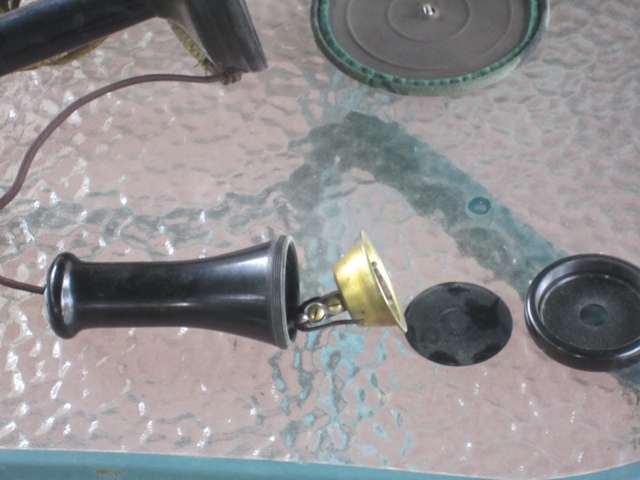
Automatic Electric Stairstep Candlestick Telephone Compl. OriginalSubset Phone

Automatic Electric Stairstep Candlestick Telephone Compl. Original Subset Phone

I found this phone by accident as my original plan is to have one candlestick phone. However, this phone is unique as it has a Mercedes dial.